Everything You Need to Know About the Saint Bernard Dog Breed

If you are thinking about bringing a Saint Bernard into your life, you are looking at one of the most recognizable and loving giant breeds in the world. Famous for their imposing size and deeply affectionate nature, these dogs have earned their reputation as patient, devoted family companions.
However, sharing your home with a dog that can easily outweigh an adult human requires preparation. The Saint Bernard dog breed is not just a larger version of a standard dog. Giant breeds come with unique needs regarding nutrition, joint health, training, and everyday living space. While their calm demeanor makes them incredibly endearing, managing their shedding, heavy drooling, and massive physical footprint takes dedication.

Whether you are a seasoned dog owner or looking for your very first puppy, understanding the reality of living with a Saint Bernard will help you set your new companion up for a healthy, happy life. This guide covers their history, temperament, care requirements, and what you can truly expect when you bring one of these gentle giants home.
The History of the Alpine Rescue Dog
The Saint Bernard traces its roots back to the Swiss Alps. During the 17th century, monks at the Great Saint Bernard Hospice—a refuge for travelers crossing the treacherous mountain pass between Switzerland and Italy—began keeping large working dogs. Originally intended to guard the grounds, these dogs soon displayed an incredible talent for pathfinding and locating stranded travelers in deep snow.
Over three centuries, hospice dogs were credited with saving thousands of lives. The dogs of that era were slightly smaller and more agile than the massive companions we recognize today. Interestingly, the famous barrel of brandy often depicted hanging from a Saint Bernard’s collar is purely a myth, popularized by an 1820 painting by Edwin Landseer.
Today, modern Saint Bernards are rarely used for mountain rescue, but they retain the protective, loyal, and steady nature that made their ancestors so dependable.
Saint Bernard Appearance and Size

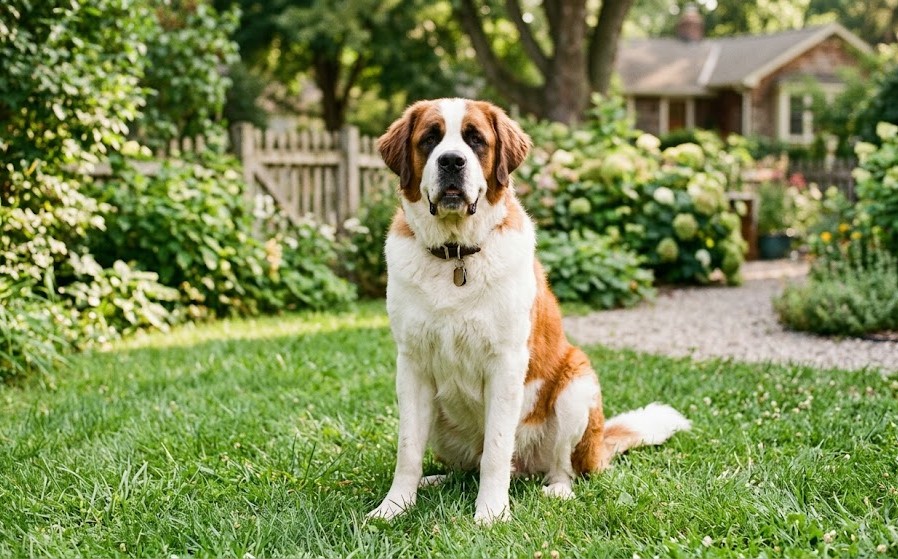
There is no ignoring a Saint Bernard in the room. They are powerful, deep-chested, and heavily boned dogs with a massive head and a gentle, slightly drooping expression.
The breed actually comes in two distinct coat types:
- Shorthaired (Smooth): A dense, tough, and flat coat.
- Longhaired (Rough): A medium-length, slightly wavy coat with a bushy tail.
Both varieties feature the same classic coloring, typically white with splashes of red, mahogany, brindle, or brown, often with a dark mask shading their eyes. Despite the visual differences, both coat types require a similar amount of grooming and shed just as heavily.
How Big Do They Actually Get?
Understanding their physical size is the first step in deciding if you have the right home for this breed. They grow rapidly during their first year, though they do not reach full physical and mental maturity until they are two or three years old.
Saint Bernard Size Guidelines:
- Male Weight: 140 to 180 pounds (63 to 81 kg)
- Female Weight: 120 to 140 pounds (54 to 63 kg)
- Male Height: 28 to 30 inches at the shoulder
- Female Height: 26 to 28 inches at the shoulder
Temperament: Are Saint Bernards Good Family Dogs?
The Saint Bernard temperament is the primary reason so many people fall in love with the breed. They are famously placid, gentle, and eager to please. A well-socialized Saint Bernard is highly affectionate and thrives on being included in household activities.
They are often referred to as “nanny dogs” because of their incredible patience and tolerance around children. However, because of their massive size, interactions between a Saint Bernard and young children must always be supervised. A clumsy puppy or an excited adult can easily knock over a small child by accident.
While they are highly social and generally welcoming of guests, they possess a deep-rooted loyalty. They will naturally position themselves between their family and a perceived threat, making them excellent, albeit quiet, watchdogs.
Are They Good for First-Time Dog Owners?

A Saint Bernard can be a wonderful choice for a first-time owner, but only if that owner is committed to early training. Because they are so eager to please, they are relatively easy to teach.
The challenge lies in their sheer mass. A stubborn 30-pound dog is an annoyance; a stubborn 160-pound dog is a safety hazard. First-time owners must prioritize leash training, basic obedience, and socialization while the dog is still small enough to physically manage. If you are willing to invest time in consistent, reward-based training during their first year, their naturally docile personality makes them a joy to live with.
Caring for Your Saint Bernard
Living with a giant breed requires adjustments to your daily routine and budget. Everything from food and medication to dog beds and travel crates will cost more than it would for a medium-sized dog.
Exercise Needs
Despite their imposing build, Saint Bernards have surprisingly moderate exercise requirements. They are not built for running marathons or intense agility courses.
- Adult Dogs: A daily 30-to-45-minute walk, paired with some gentle playtime in the yard, is usually enough to keep them happy and physically fit.
- Puppies: You must be incredibly careful exercising a Saint Bernard puppy. Because their bones and joints grow so rapidly, forced exercise like jogging or long, strenuous hikes can cause permanent joint damage. Stick to short, self-directed play sessions until they are fully mature.
They also have a very low tolerance for heat. In warmer months, walk them early in the morning or late in the evening, keep them indoors with air conditioning, and always provide plenty of fresh water.
Grooming and Drool Management
If you prefer an immaculate house, a Saint Bernard will test your sanity. They shed moderately year-round and “blow their coat” (shed heavily) twice a year in the spring and fall. You will need to brush them at least two to three times a week to manage loose fur and prevent matting in the longhaired variety.
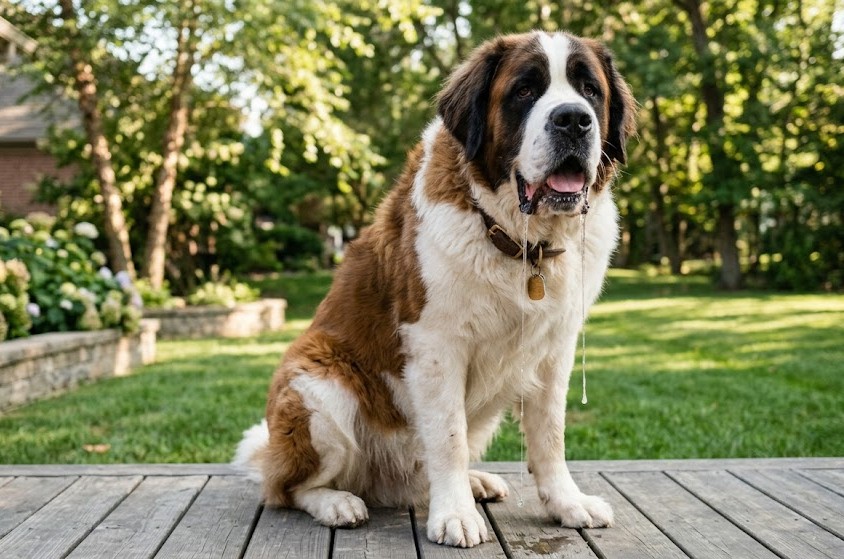
Then there is the drool. Thanks to their loose jowls, Saint Bernards drool significantly, especially after eating, drinking, or exercising. Most owners learn to keep “drool rags” tucked in various rooms of the house to wipe their dog’s mouth and protect the furniture.
Feeding a Giant Breed
Proper nutrition is critical, especially during the puppy phase. You must feed a high-quality diet specifically formulated for large or giant breeds. These formulas contain the precise ratio of calcium and phosphorus needed to ensure their bones grow at a safe, controlled rate.
Obesity is a major risk for this breed and puts devastating strain on their joints. Measure their food carefully and resist the urge to overfeed them, even if they give you their best sad-puppy eyes.
Training and Socialization
Training a Saint Bernard should begin the day you bring them home. They respond beautifully to positive reinforcement methods that use treats, praise, and toys. Because they can be slightly sensitive, harsh corrections or punishment-based methods will only cause them to shut down or become fearful.
Focus heavily on:
- Loose-leash walking: Teaching them not to pull before they weigh 150 pounds.
- Anti-jumping: A jumping Saint Bernard is dangerous to guests and children.
- Handling: Get them comfortable with having their paws, ears, and mouth touched so that grooming and vet visits are manageable later on.
Early socialization is equally important. Expose your puppy to various people, sounds, environments, and other animals so they grow into confident, well-adjusted adults.
Common Health Concerns to Watch For
Like all giant breeds, the Saint Bernard lifespan is relatively short, averaging 8 to 10 years. They are prone to specific genetic health issues that every owner should be aware of.
Gastric Dilatation-Volvulus (Bloat): This is a sudden, life-threatening condition where the stomach fills with gas and twists on itself. Giant, deep-chested breeds are at the highest risk. To help prevent bloat, feed your dog multiple small meals rather than one large one, use a slow-feeder bowl, and restrict vigorous activity for at least an hour after eating. If your dog is pacing, drooling excessively, or has a hard, swollen abdomen, seek emergency veterinary care immediately.
Orthopedic Issues: Due to their size, they are highly susceptible to hip dysplasia and elbow dysplasia. Keeping your dog at a lean, healthy weight is the best way to minimize joint stress.
Eye Conditions: Their naturally droopy eyes make them prone to entropion (eyelids rolling inward) and ectropion (eyelids rolling outward), both of which can cause irritation and may require surgical correction by a veterinarian.
Frequently Asked Questions
Do all Saint Bernards drool?
Yes, to varying degrees. The shape of their jowls makes it physically impossible for them to keep all their saliva in their mouths. If you cannot tolerate drool on your clothes, floors, or walls, this is not the right breed for you.
Are Saint Bernards aggressive?
No, a well-bred and properly socialized Saint Bernard is not aggressive. They are naturally docile and friendly. However, they are protective of their families. Without proper socialization, their protective instincts can turn into suspicion of strangers.
How much does a Saint Bernard eat?
An adult Saint Bernard typically eats between 4 and 8 cups of high-quality dry food per day, divided into two meals. The exact amount depends on the dog’s age, weight, metabolism, and activity level.
Can a Saint Bernard live in an apartment?
While they are relatively calm indoors and do not need a massive yard to run in, their physical size makes apartment living difficult. They take up a lot of floor space, and navigating stairs daily can be tough on their joints, especially as they age. A home with a fenced yard is generally a much better fit.
Do they get along with other pets?
Yes, Saint Bernards generally get along very well with other dogs and household pets, including cats, provided they are socialized together from a young age. Their low prey drive makes them peaceful companions.
Conclusion
The Saint Bernard dog breed offers an unmatched level of loyalty, affection, and gentle companionship. They make phenomenal family pets who will happily spend their days resting at your feet and keeping a watchful, loving eye on your household.
However, owning a giant breed is a major commitment. You must be prepared for the financial costs of their food and healthcare, the physical reality of their shedding and drool, and the absolute necessity of early, consistent training. If you have the space in your home and the time to dedicate to their upbringing, a Saint Bernard will reward you with a deep, enduring bond that makes every challenge completely worth it.

![What to Know About Doberman Pinschers [2024]](https://100dogbreeds.com/wp-content/uploads/2024/07/dobberman-featured-scaled-e1721154989478-768x384.jpg)

![Are Golden Retrievers Smart? [2024]](https://100dogbreeds.com/wp-content/uploads/2024/09/Golden-retriever-featured-768x512.jpg)
![German Shepherd Dog Breed Health and Care[2024]](https://100dogbreeds.com/wp-content/uploads/2024/07/German-Shepherd-with-owner-scaled-e1719856225884-768x384.jpg)