First Aid for Dogs – Shock, Rescue Breathing, and CPR


Imagine your dog suddenly collapses during a walk. Would you know what to do? Shockingly, 9 out of 10 pet owners don’t know basic pet first aid skills, according to new research from the PDSA. This lack of knowledge could mean the difference between life and death in an emergency. While first aid for dogs isn’t a substitute for veterinary care, knowing essential techniques like dealing with shock, performing rescue breathing, and administering CPR can be crucial in those critical first moments. Are you prepared to be your dog’s hero when it matters most?
Preparing for Emergencies
The first step in emergency care for dogs is being prepared. Create a dog first aid kit that includes:

- Gauze pads and bandages
- Adhesive tape
- Scissors
- Tweezers
- Antiseptic wipes
- Saline solution
- Disposable gloves
- Blanket or towel
- Muzzle (for safety)
Keep important phone numbers handy, including your veterinarian’s contact information and the number for a 24-hour emergency veterinary clinic.
Assessing Emergency Situations
When faced with a dog emergency, stay calm and assess the situation:
- Ensure your safety and the safety of others around you.
- Approach the injured dog cautiously, even if it’s your own pet. Pain can cause even friendly dogs to bite.
- Look for signs of immediate life-threatening conditions such as severe bleeding, difficulty breathing, or unconsciousness.
First Aid for Dogs: Common Emergencies

While various emergencies require specific approaches, here are some general guidelines for common situations:
- Bleeding: Apply direct pressure using a clean cloth or gauze. For severe bleeding, seek immediate veterinary care.
- Fractures: Minimize movement and gently stabilize the injured area. Do not attempt to set the bone yourself.
- Burns: Flush the area with cool water and cover with a clean, damp cloth.
- Poisoning: Contact your veterinarian or a pet poison helpline immediately. Do not induce vomiting unless instructed to do so by a professional.
- Choking: If your dog can breathe, try to remain calm and get to a vet. If breathing is obstructed, perform the Heimlich maneuver by giving sharp thrusts to the abdomen.
- Heat stroke: Move your dog to a cool area, offer water, and apply cool (not cold) water to their body, especially the neck, armpits, and groin areas.
Related reads:
The Ultimate First Time Dog Owner Checklist [2024]
Shock in Dogs
Shock is a serious condition that requires immediate attention. It occurs when there’s not enough blood flow to the body’s tissues and can be caused by severe injury, blood loss, or other traumatic events.
Signs of shock in dogs include:
- Pale gums
- Rapid, shallow breathing
- Weak pulse
- Lethargy or unconsciousness
- Cold extremities
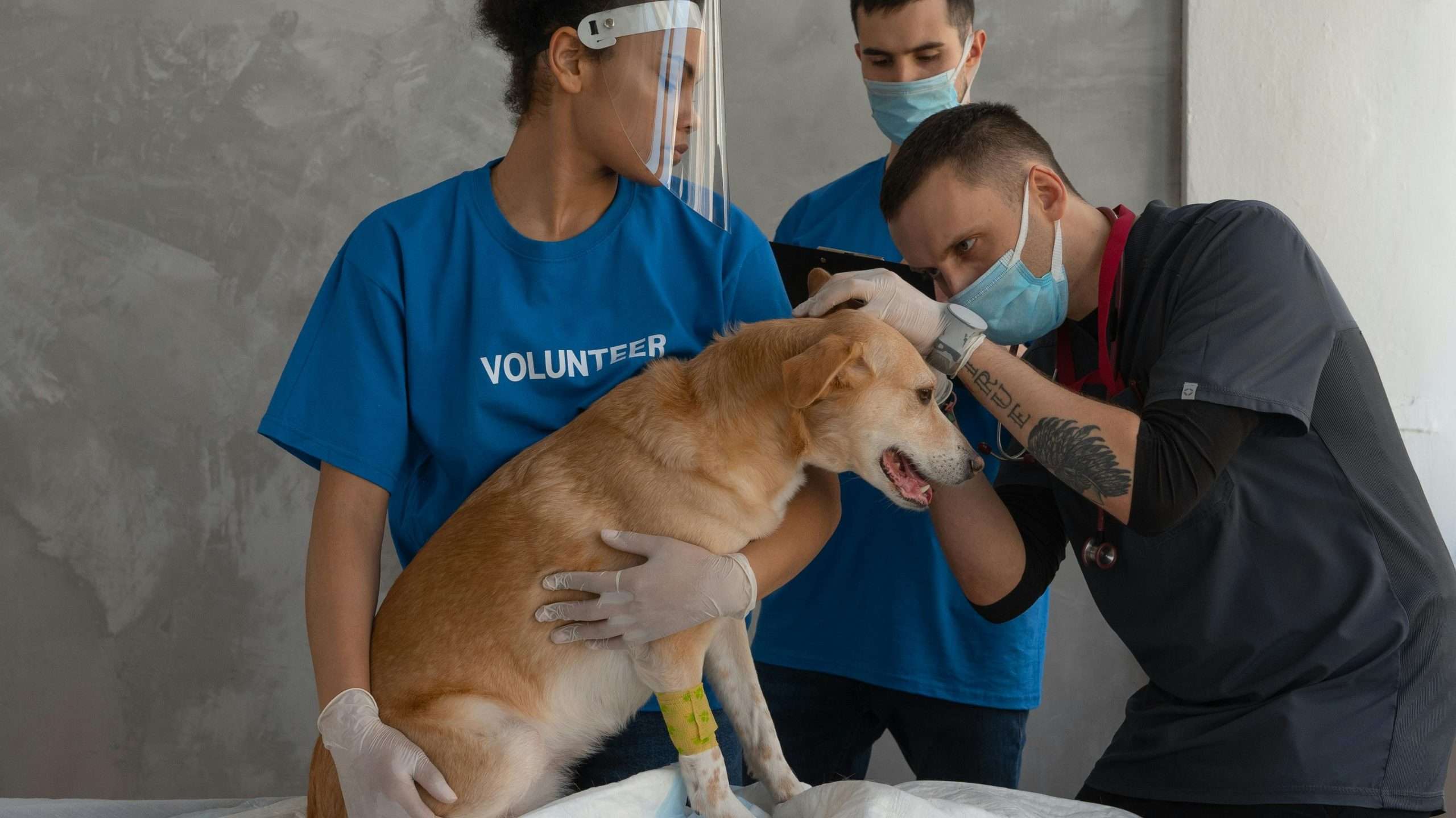
First aid for dogs in shock involves the following steps:
- Keep the dog warm by covering them with a blanket.
- Elevate the hindquarters slightly, unless this causes pain or difficulty breathing.
- Minimize handling to prevent further stress.
- Seek immediate veterinary care.
Rescue Breathing for Dogs
If your dog is not breathing but has a heartbeat, you may need to perform rescue breathing:
- Ensure the airway is clear. Gently pull the tongue forward and check for any obstructions.
- Close the dog’s mouth and extend the neck to open the airway.
- Cover your dog’s nose with your mouth and exhale until you see the chest rise.
- Give one breath every 4-5 seconds.
CPR for Dogs
If your dog is not breathing and has no heartbeat, CPR for dogs may be necessary:
- Lay your dog on their right side on a firm surface.
- Place one hand over the other on the chest behind the elbow (for large dogs) or use thumb and fingers on either side of the chest (for small dogs).
- Compress the chest about 1/3 to 1/2 of its width at a rate of 100-120 compressions per minute.
- After 30 compressions, give two rescue breaths.
- Continue cycles of 30 compressions and 2 breaths until you reach veterinary care or the dog starts breathing on its own.
Remember, CPR on dogs should only be performed if you’re certain there’s no breathing or heartbeat. Performing CPR on a dog with a heartbeat can cause serious harm.
Transporting an Injured Dog
When transporting an injured dog:
- Move the dog gently, using a makeshift stretcher if necessary (a board or blanket can work).
- Keep the dog warm and as still as possible during transport.
- If possible, call ahead to the veterinary clinic so they can prepare for your arrival.
Follow-up Veterinary Care
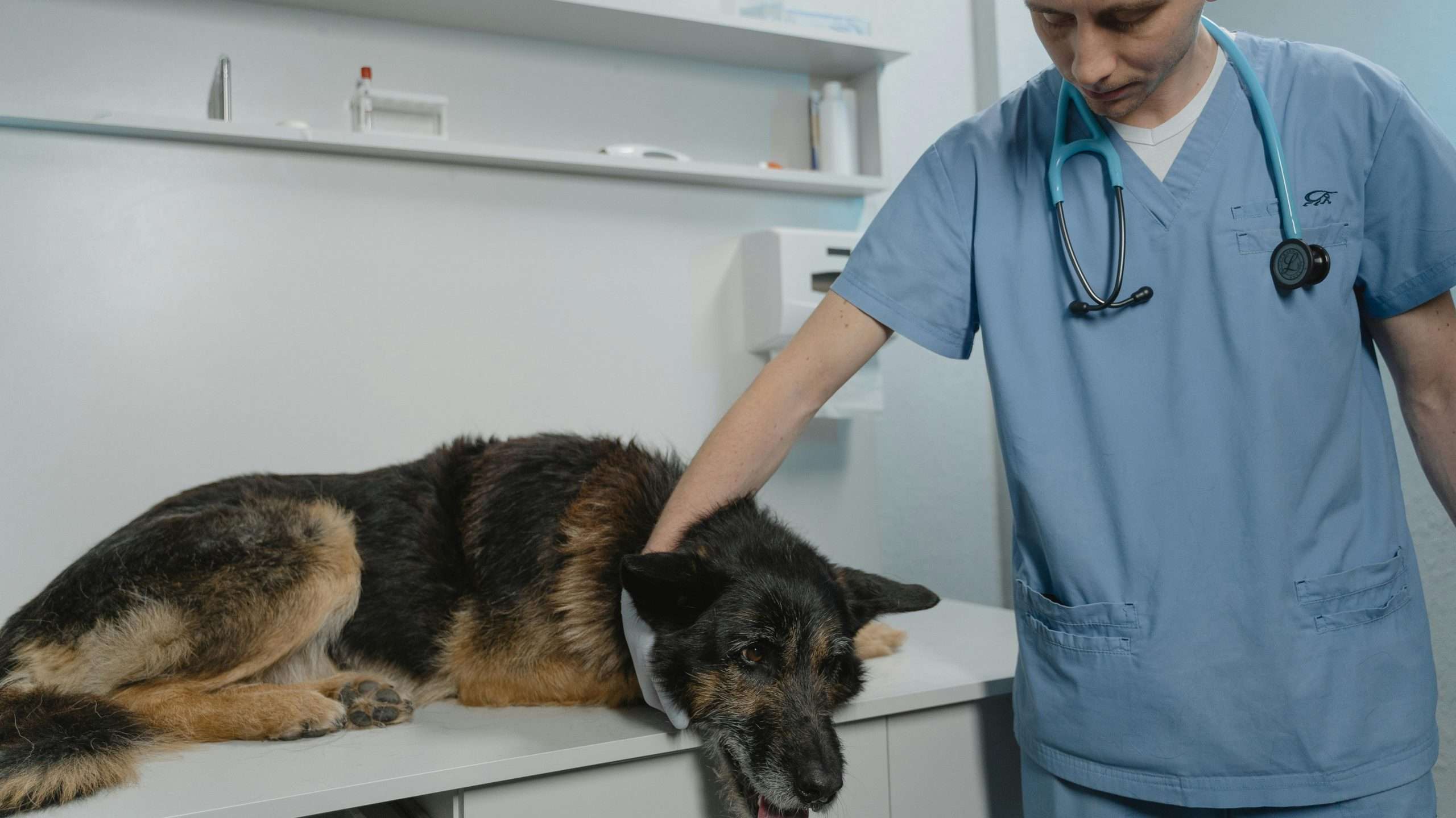
After administering first aid to your dog, always seek professional veterinary care. Your initial actions can be lifesaving, but they are not a substitute for proper medical treatment. Be prepared to provide the veterinarian with details about what happened and what first aid measures you took.
Prevention and Preparedness
The best way to handle emergencies is to prevent them when possible:
- Keep your dog up-to-date on vaccinations and regular check-ups.
- Dog-proof your home to prevent accidents.
- Learn to recognize signs of illness or distress in your dog.
- Consider taking a pet first aid course to build your skills and confidence.
Saying Goodbye!
First aid for dogs is an essential skill for every pet owner. While it’s not a replacement for professional veterinary care, knowing how to respond in emergencies can make a life-saving difference. Focus on staying calm, assessing the situation, and taking appropriate action. Remember, your primary goals are to preserve life, reduce pain and discomfort, and get your dog to professional care as quickly as possible.
By being prepared and knowledgeable about first aid for dogs, including how to handle shock, perform rescue breathing, and administer CPR, you can be your dog’s first line of defense in an emergency. Always follow up with veterinary care and, when in doubt, err on the side of caution and seek professional help. Your quick thinking and action, combined with proper veterinary care, give your furry friend the best chance of a full recovery.
FAQs about First Aid for Dogs
- Can I use human medications for dog first aid?
No, many human medications are toxic to dogs. Always consult a veterinarian before giving any medication.
- How long can I perform CPR on my dog?
Continue CPR until you reach veterinary care or for up to 20 minutes if you’re unable to get to a vet.
- Should I induce vomiting if my dog eats something toxic?
Never induce vomiting without consulting a veterinarian first. Some substances can cause more harm if vomiting is induced.
- How often should I update my dog’s first aid kit?
Check your kit every 6 months to ensure supplies are not expired and replace any used items.
- Can I use a human CPR mask on a dog?
While not ideal, a human CPR mask can be used in an emergency. However, it’s best to have a pet-specific CPR mask in your first aid kit.

![The Ultimate First Time Dog Owner Checklist [2024]](https://100dogbreeds.com/wp-content/uploads/2024/07/first-time-dog-owner-768x512.jpg)