Why Do Dogs Jump on You: 4 Reasons & How to Stop It

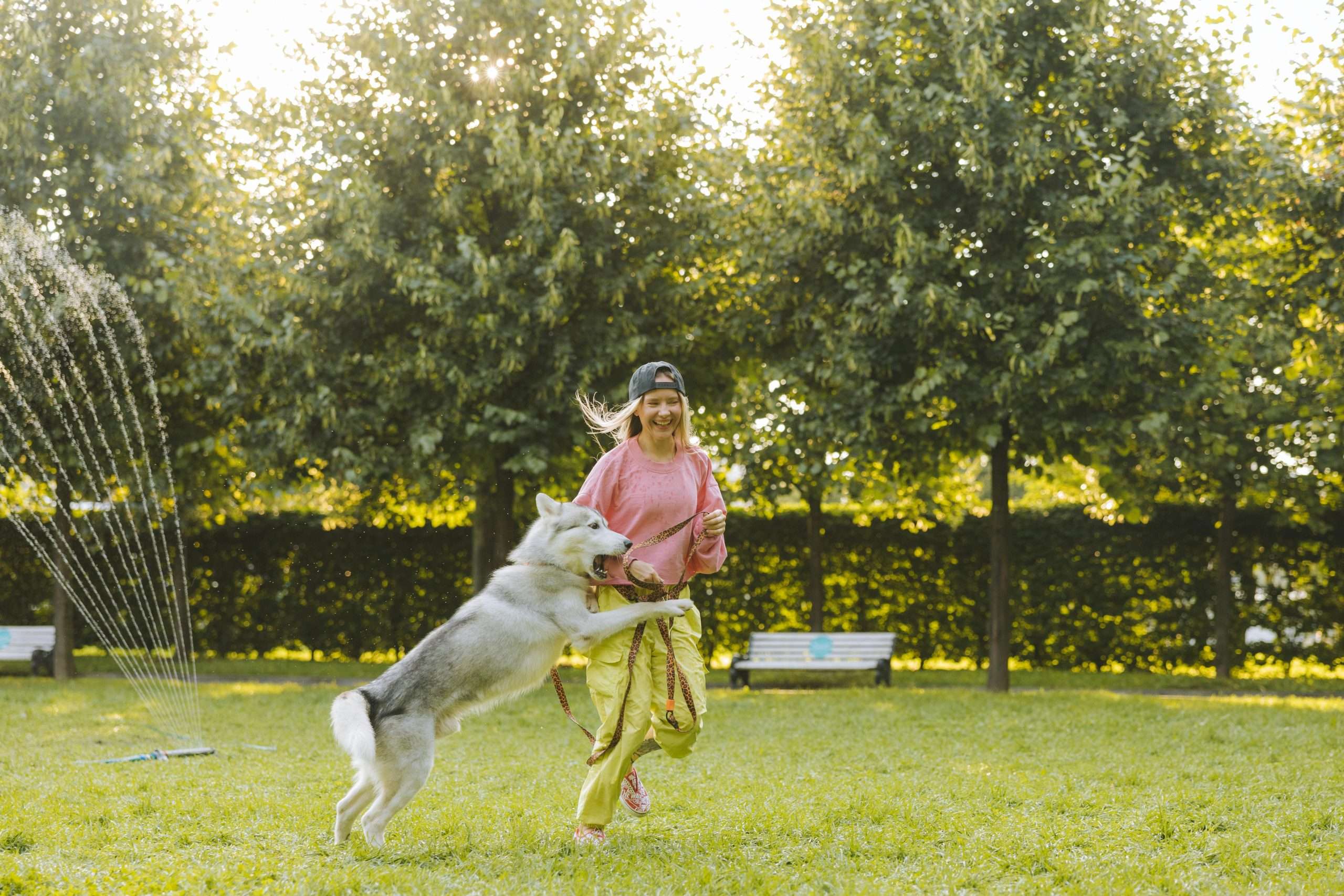
Dogs are bundles of energy and joy, but one behavior many pet parents struggle with is when their dogs jump on them or their guests. While it may seem harmless at first, this behavior can quickly become frustrating and even dangerous. From soiled clothes to accidental injuries, there are several reasons why it’s crucial to understand why dogs jump and learn how to manage it.
In this article, we’ll see the most common reasons behind this behavior, the potential risks it poses, and practical tips to stop your furry friend from jumping.

Why Do Dogs Jump on You?
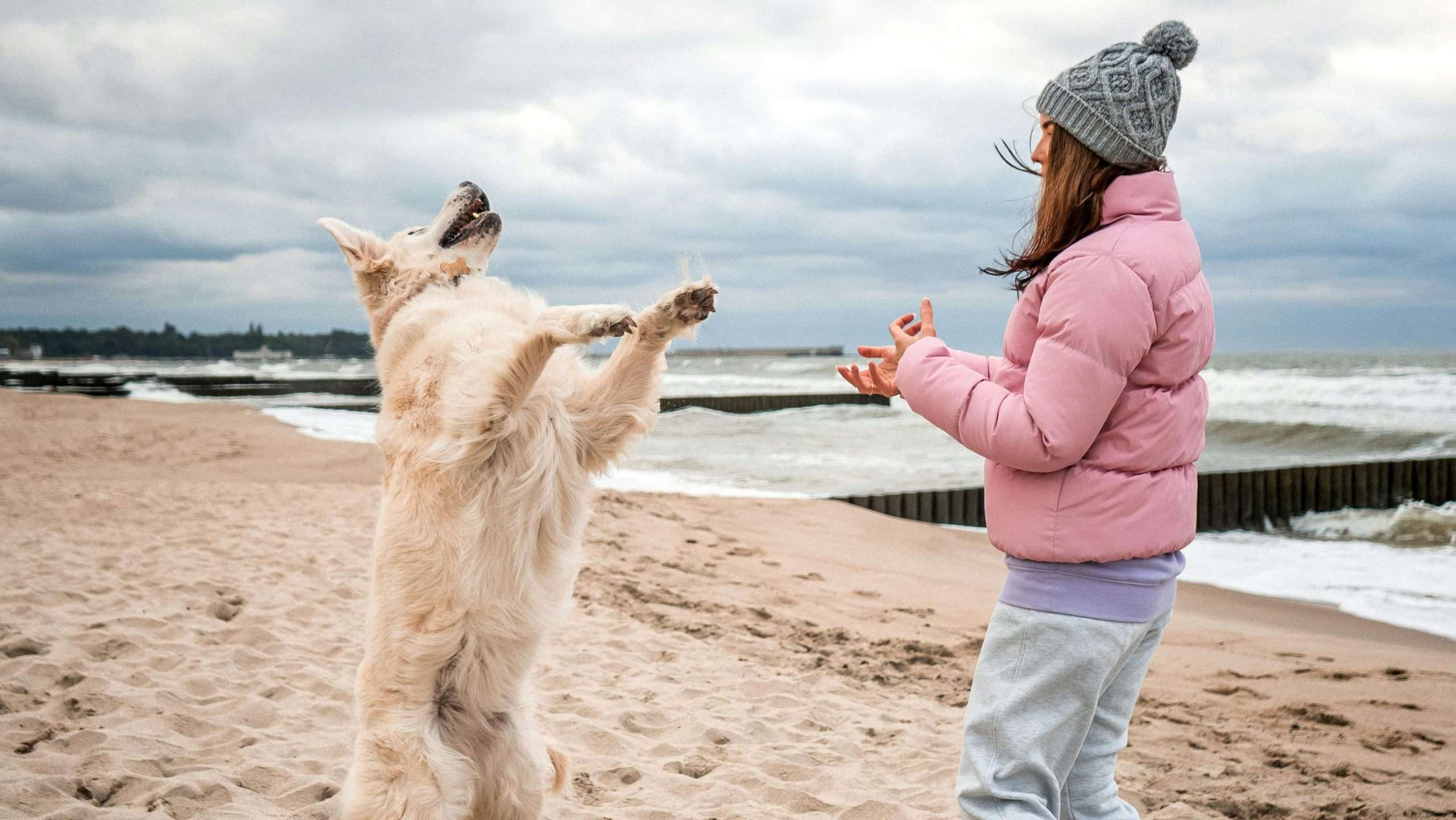
Jumping is a natural behavior for dogs. Whether they’re puppies or fully grown, dogs instinctively jump to get closer to your face for attention, affection, or communication. In the wild, dogs greet each other face-to-face, and since we’re often taller than them, they jump to bridge the gap.
While their intentions are innocent, it’s essential to address this behavior to maintain control and ensure everyone’s safety. Understanding the “why” is the first step to tackling the issue effectively.
4 Common Reasons Why Dogs Jump on You
1. They’re Saying Hello
One of the most common reasons dogs jump is to greet you. Dogs often express excitement by wanting to get close to your face, and jumping is their way of saying, “Hello!” Some dogs may also attempt to lick your face as a sign of affection, which makes jumping an instinctive behavior during greetings.
2. They’re Excited
Excitement is another big reason behind a dog’s jumping habits. Here are some common scenarios:
- You just walked in the door after being away.
- A new guest has entered the home.
- You’re holding a leash, signaling it’s time for a walk.
- You’re playing with them, and their energy levels skyrocket.
Dogs often can’t contain their enthusiasm and resort to jumping as an outlet for their excitement.
3. They’re Seeking Attention
Jumping is an effective way for dogs to grab your attention. Whether they’re hungry, want to play, or need to go outside, many dogs learn that jumping guarantees a response. Even negative reactions, like yelling or pushing them off, can reinforce this behavior because they’re still getting what they want – your attention.
4. They’re Acting Aggressively (Rarely)
In some cases, jumping may be tied to fear or aggression, particularly if the dog’s body language appears tense or stiff. This form of jumping is rare but can happen if a dog feels threatened or insecure around unfamiliar people.
If you suspect fear-based aggression, consulting a professional dog trainer or behaviorist is the best course of action.
Why Is It Important to Stop Dogs Jumping?
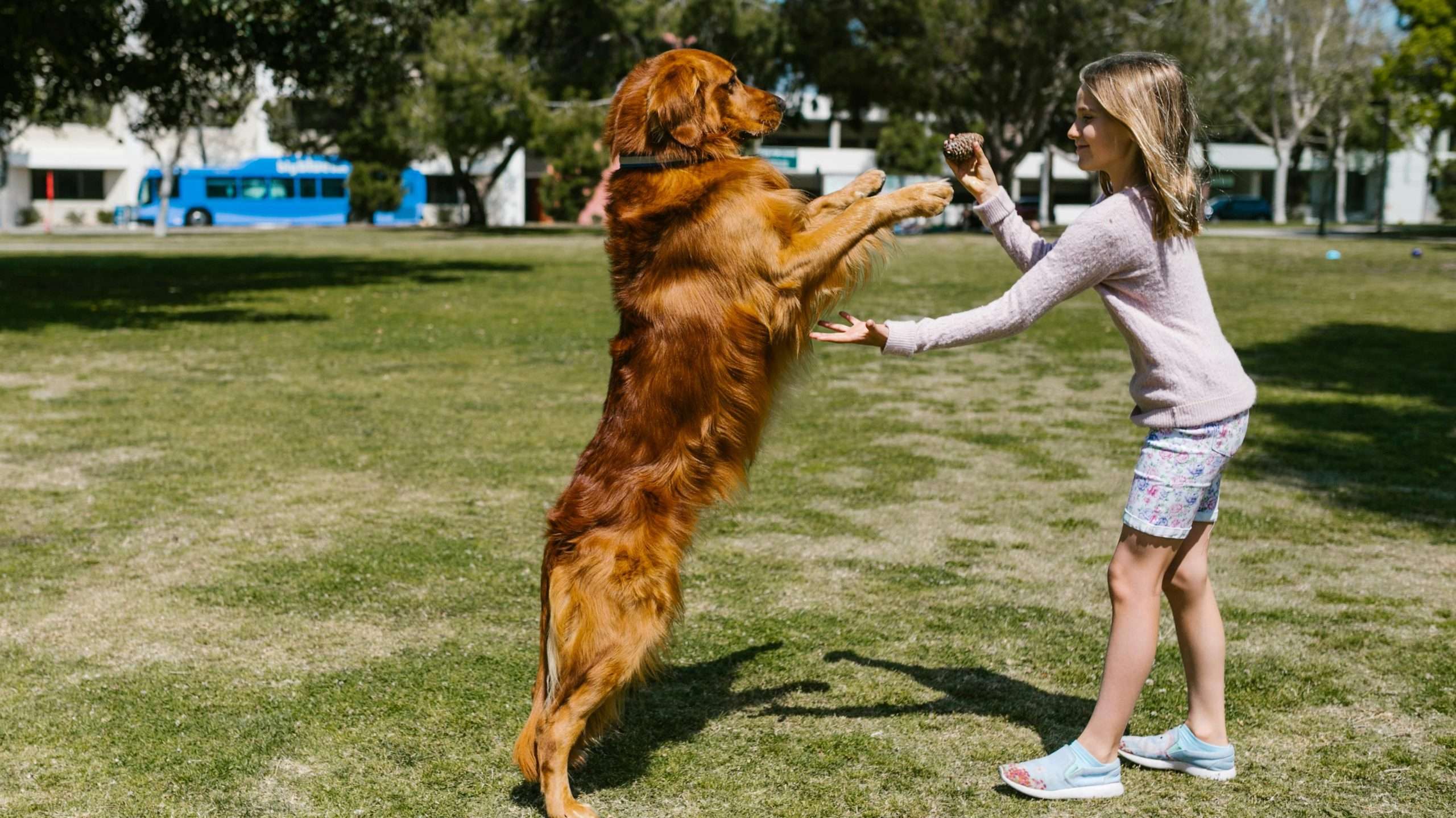
Although dogs jumping might seem harmless, it can pose several risks:
- Accidental Injuries: Jumping dogs can easily knock over small children or older adults, causing harm.
- Reinforced Bad Habits: If not addressed early, jumping can become a deeply ingrained behavior.
- Hazards in Public: A dog jumping on strangers during walks or at parks can be intimidating and unsafe.
Addressing the behavior ensures your dog learns appropriate ways to interact with people, keeping everyone safe and comfortable.
How to Stop Your Dog From Jumping
Stopping dogs jumping takes time, consistency, and patience. Here are effective methods to train your dog:
Train “Four on the Floor”
This technique teaches dogs to keep all four paws on the ground during greetings.
- Put your dog on a leash when someone approaches.
- Toss a treat on the floor before they can jump.
- While your dog eats, allow the guest to greet them calmly.
- Repeat this process until your dog understands that staying on the ground leads to rewards.
Train “Sit” for Greetings
Teaching your dog to sit is another effective way to redirect their jumping behavior.
- Ask your dog to sit as you approach them.
- If they stay seated, reward them with praise or a treat.
- If they jump, turn away and ignore them.
- Repeat until your dog associates sitting with positive attention.
This method works well with visitors too – just ask your guests to follow the same routine.
Prevent Jumping During Training
While you’re teaching these behaviors, it’s essential to manage situations where your dog might jump:
- Use baby gates to block access to the front door.
- Keep your dog on a leash when guests arrive.
- Create a designated calm space with toys and treats to distract them.
Additional Tips to Prevent Jumping Behavior
Avoid Reinforcing the Behavior
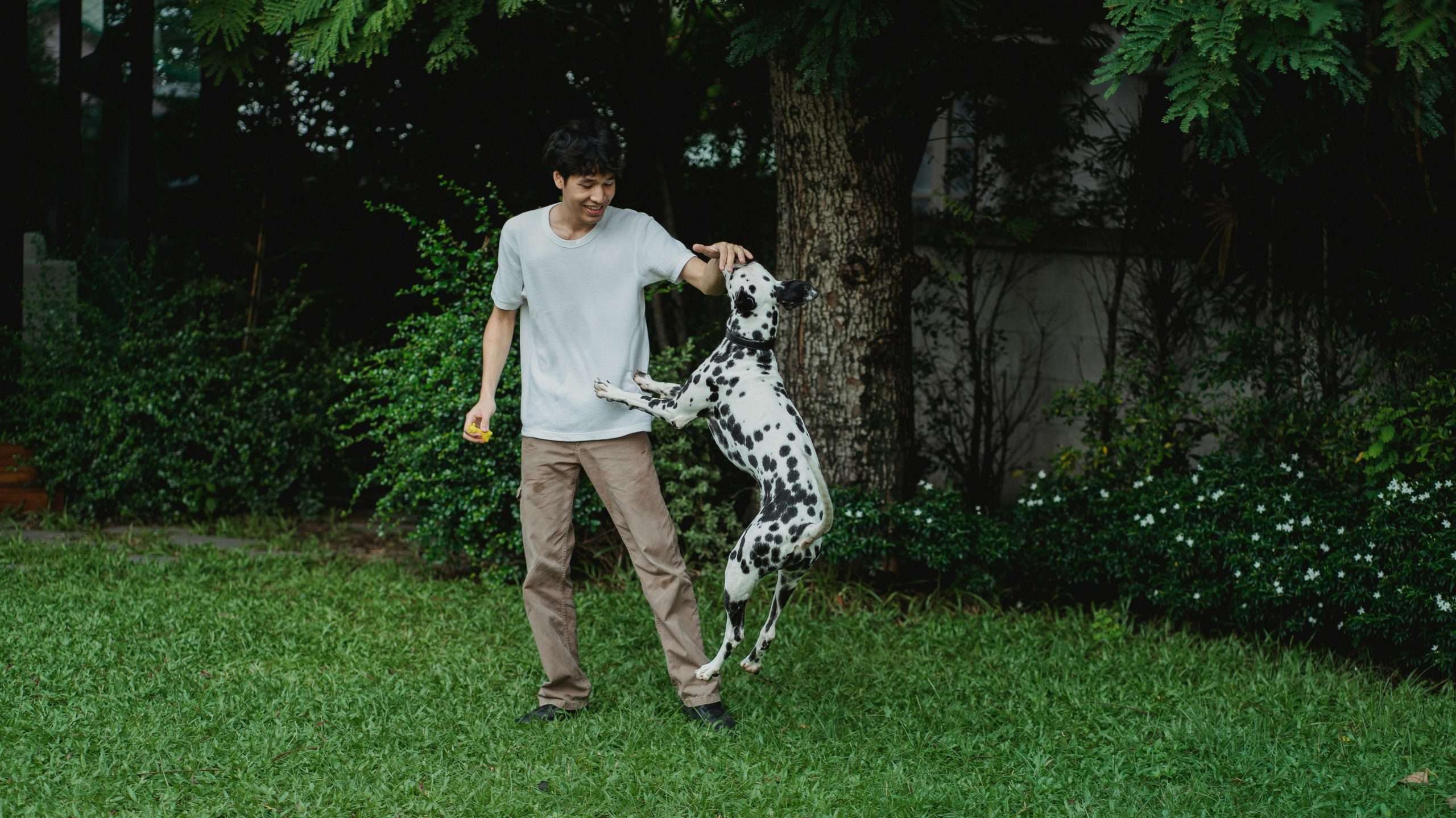
Remember, any reaction—positive or negative—can reinforce jumping. Instead of pushing your dog away, turn your back and wait for them to calm down before engaging.
Related reads:
Learn The Top 6 Methods of Positive Reinforcement in Dog Training
Create a Calm Space
Designate an area in your home where your dog can relax when visitors arrive. This space can include their bed, a white noise machine, and toys to keep them occupied.
Redirect Their Energy
Before situations that might trigger jumping (like greeting guests), try redirecting your dog’s energy by giving them a toy to carry or asking them to perform a task like fetching.
Final Thoughts
Dogs jumping may be a natural behavior, but it’s one that requires consistent training to address. By understanding the reasons behind your dog’s jumping and applying the strategies outlined above, you can help them develop polite greeting habits.
With time, patience, and positive reinforcement, you’ll transform those boisterous jumps into calm, happy interactions that everyone can enjoy.
FAQs About Dogs Jumping
1. Why Do Some Dogs Jump More Than Others?
Certain breeds or high-energy dogs may be more prone to jumping due to their temperament or excitement levels.
2. Can You Stop Dogs Jumping Completely?
Yes, with consistent training and patience, you can curb jumping behavior. However, occasional lapses may occur, especially in highly stimulating situations.
3. Should I Punish My Dog for Jumping?
No, punishment can harm your bond with your dog and may exacerbate the problem. Instead, use positive reinforcement to teach alternative behaviors.
4. Is Jumping Ever a Sign of an Underlying Problem?
Sometimes, excessive jumping can indicate boredom or unmet needs. If your dog isn’t getting enough mental stimulation, exercise, or attention, they may resort to jumping as a way to release pent-up energy. Ensuring your dog gets adequate exercise and playtime can significantly reduce this behavior.
5. How Long Does It Take to Train a Dog to Stop Jumping?
The time it takes depends on your dog’s personality, age, and the consistency of your training. Puppies or younger dogs may learn faster, while older dogs might take longer to unlearn this behavior. On average, it can take a few weeks to a few months of consistent training to see results.