Dog Vision: How They Actually See the World

When you look into your dog’s eyes, you may wonder what the world looks like from their perspective. Do they see the same colors we do, or is their world more muted and gray? The truth is, dog vision is very different from human vision. While our eyes are built to capture a wide spectrum of colors and fine details, dogs rely on a visual system adapted to their needs as hunters and companions. Understanding dog vision not only satisfies curiosity but also helps us make better choices when it comes to training, toys, and caring for our furry friends.
What Colors Can Dogs See?
The biggest misconception is that dogs see the world in black and white. In reality, dog vision includes colors, just not as many as humans can perceive. Human eyes contain three types of color-detecting cells called cones. These cones allow us to distinguish between red, green, and blue wavelengths, which together give us the full spectrum of colors.

Dogs, however, only have two types of cones. This means their color perception is limited mainly to blue and yellow. Shades of red and green, which humans see easily, appear to dogs as muted tones of gray or brown. In this way, dog vision is similar to the vision of a person with red-green color blindness.
Imagine tossing a bright red ball onto a green lawn. To you, the ball stands out sharply. To your dog, both the ball and the grass may blend into similar shades, making the toy harder to spot. If that same ball were blue or yellow, it would stand out much more clearly in dog vision.
Interestingly, some studies suggest that dogs may also detect ultraviolet light, which humans cannot. If this is true, it could mean that dog vision allows them to perceive subtle details in their surroundings that we completely miss. This could explain why dogs often react to things we cannot see.
Related reads:
Why Does My Dog Stare At Me? 3 Common Reasons [With Tips]
How Sharp is Dog Vision?
Beyond color, the sharpness of dog vision differs from ours. Humans generally have 20/20 vision, meaning we can see details clearly from 20 feet away. Dogs, on the other hand, are closer to 20/50. This means that what a person sees clearly at 50 feet, a dog would need to be just 20 feet away to see with the same clarity.
In simple terms, dogs are somewhat nearsighted. Their world appears blurrier and less detailed than ours. But while their sharpness is limited, dog vision is specialized in other ways that give them unique advantages. For example, dogs excel at detecting movement. Even the slightest motion in the distance can catch a dog’s attention, which was crucial for survival in the wild.
So, while a dog may not recognize the writing on a sign across the street, it will likely notice the squirrel darting up a tree. This sensitivity to motion is one of the key strengths of dog vision.
Do Dogs Have Night Vision?

One of the most fascinating aspects of dog vision is how well dogs see in low light. Dogs are considered crepuscular animals, meaning they are most active during dawn and dusk. Their eyes are designed to maximize vision in these dim conditions.
Dogs’ retinas contain a higher number of rod cells compared to humans. Rod cells are responsible for detecting light and movement, especially in darker environments. Thanks to this adaptation, dog vision in low light is far superior to ours.
Another feature that enhances their night vision is a special reflective layer behind the retina called the tapetum lucidum. This layer bounces light back through the retina, giving dogs a second chance to capture whatever little light is available. It is also what causes their eyes to glow when a flashlight or car headlights shine on them at night.
While dogs’ night vision is not as sharp as daytime vision, it allows them to navigate, hunt, and remain alert when light is scarce. For comparison, human night vision is far weaker, making us more dependent on artificial light. In this sense, dog vision clearly surpasses ours.
Can Dogs Detect Motion Better Than Humans?
When it comes to motion detection, dog vision is exceptional. Dogs may not see details as clearly as humans, but they can spot movement almost instantly. This heightened ability stems from their survival instincts. In the wild, detecting the movement of prey or predators at a distance meant the difference between eating and being eaten.
Modern dogs no longer need to rely on hunting to survive, but this trait still shapes their behavior. Ever notice your dog suddenly perk up when a leaf blows across the yard or when another animal moves far in the distance? That is their motion-sensitive vision at work.
This strength also makes dogs excellent watchdogs. They are far more likely to notice a stranger approaching your home before you do. So even though humans may see a sharper, more colorful picture, dog vision is tuned to the things that matter most to them.
Comparing Dog Vision with Human Vision
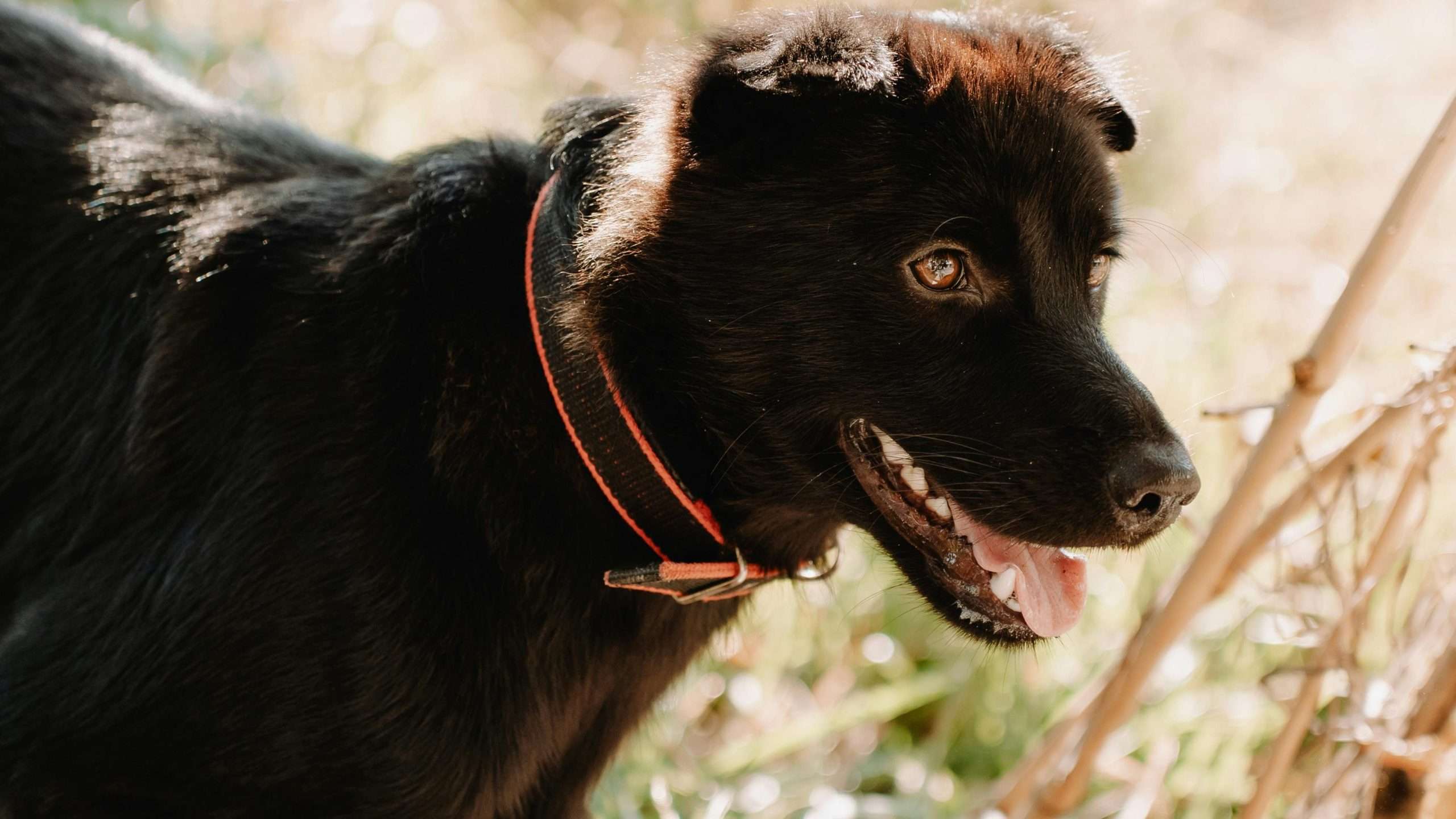
Looking at dog vision side by side with human vision helps highlight the differences:
- Color perception: Humans see red, green, and blue. Dogs mainly see blue and yellow.
- Clarity: Humans enjoy sharper detail, while dogs see blurrier images.
- Night vision: Dogs outperform humans in low light due to more rod cells and the tapetum lucidum.
- Motion detection: Dogs notice movement faster and at greater distances.
In everyday life, these differences show up in simple ways. A human may enjoy the bright variety of a flower garden, while a dog will not see the reds and greens as clearly. However, a dog can easily detect a rabbit dashing through the bushes long before the human notices. Dog vision is not better or worse than human vision. It is simply adapted to what dogs need most.
Closing Thoughts
Dogs experience the world differently through their eyes. Dog vision does not capture the same rich colors or sharp details as human vision, but it excels in detecting motion and seeing in low light. Their eyes are built for survival, allowing them to pick up on the things that matter most in their environment.
By understanding dog vision, we can better appreciate how our companions interact with the world. From choosing the right toy colors to recognizing why sudden movements catch their attention, this knowledge strengthens the bond between humans and dogs. In the end, seeing the world through dog vision helps us step closer to their unique experience of life.