How to Break Up a Dog Fight – With Useful Tips

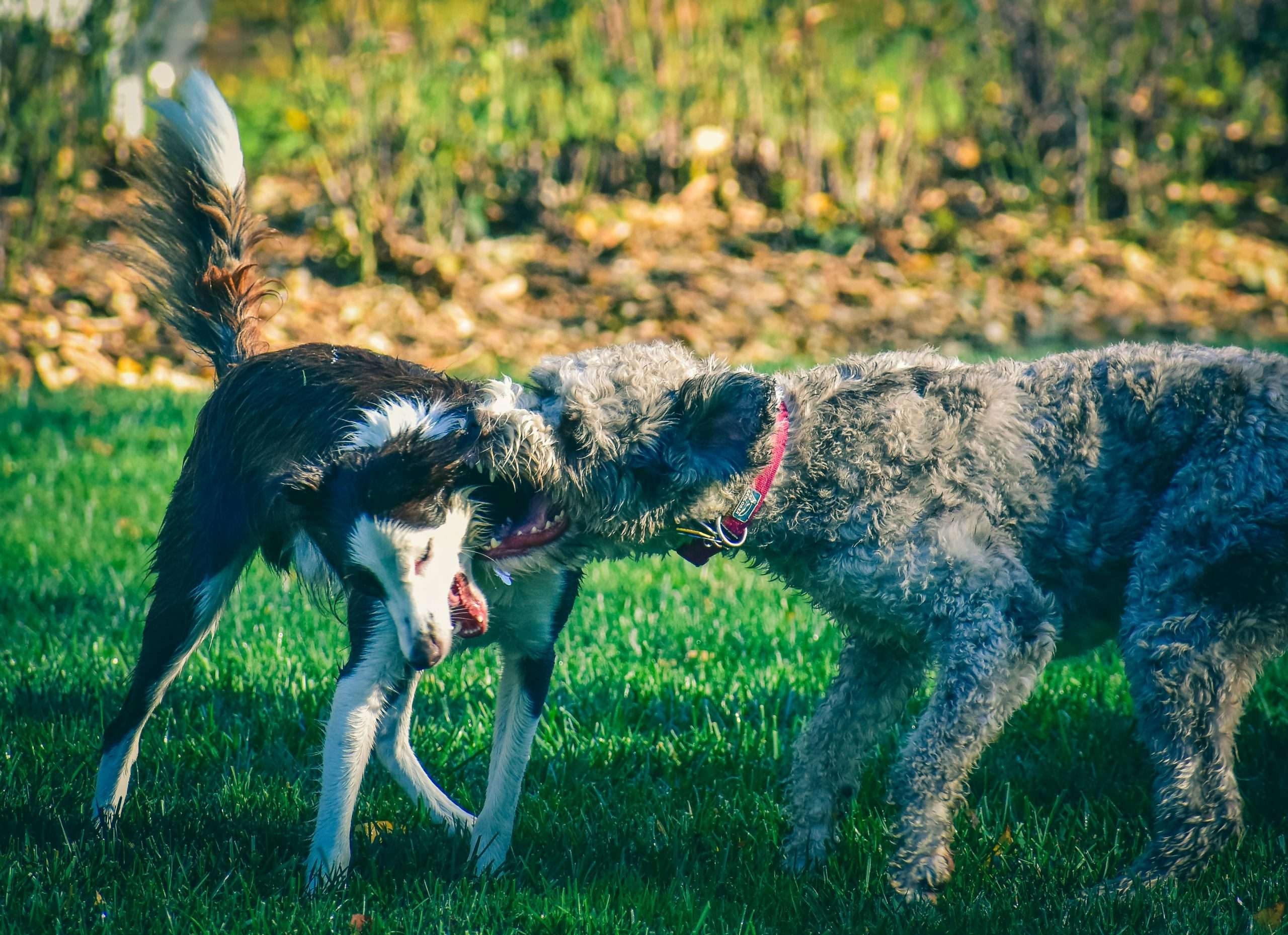
Even the most well-behaved dogs can sometimes clash. It can happen at the dog park, on a walk, or even at home between pets that usually get along. When tempers flare, a dog fight can break out in seconds. The key is knowing how to respond quickly, safely, and calmly.
This guide covers practical steps to break up a dog fight, ways to prevent future incidents, and what to avoid to protect yourself and your pets.

Stay Calm and Assess the Situation
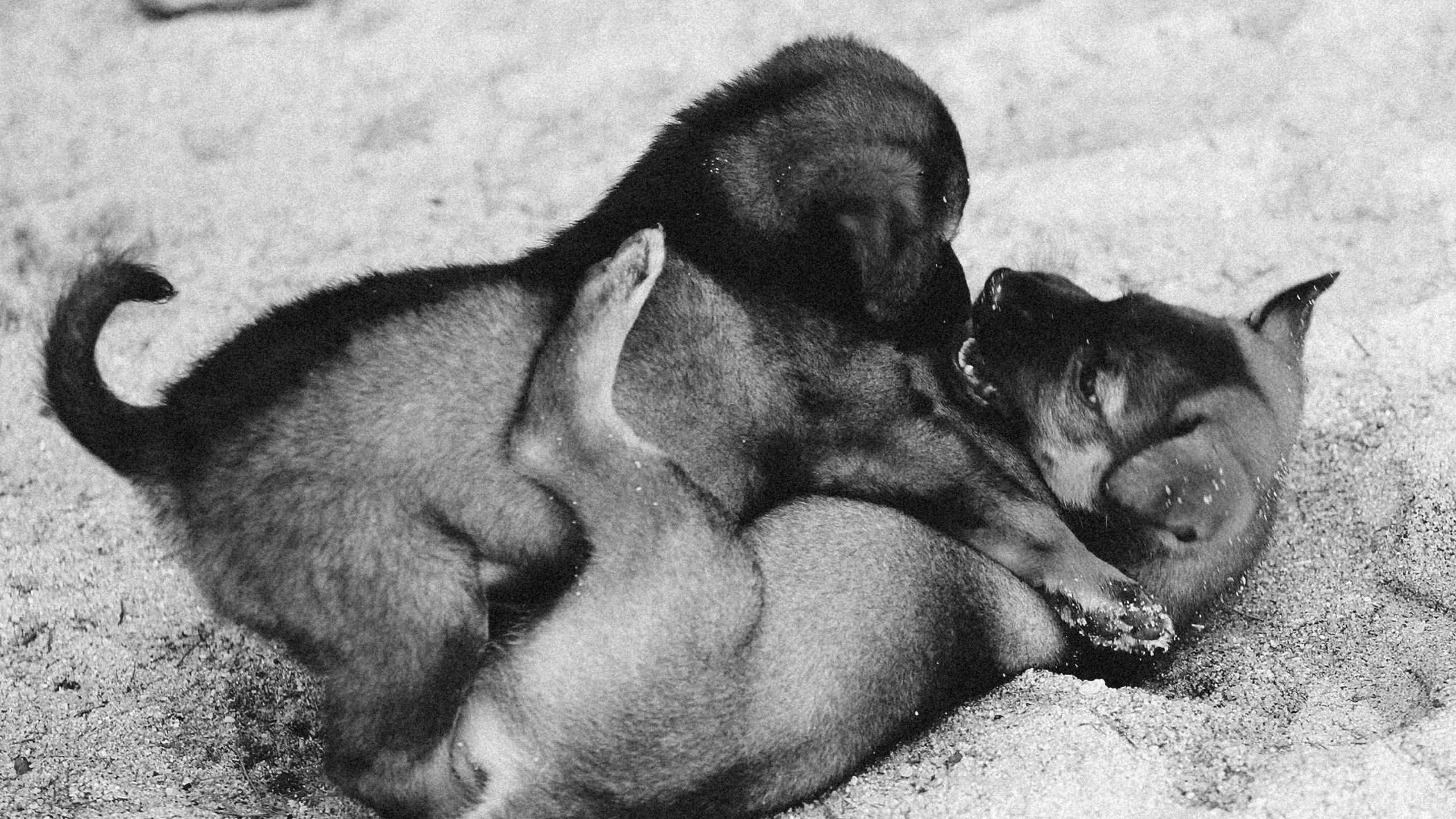
The first rule during any dog fight is simple: don’t panic. When dogs are in fight mode, they aren’t thinking rationally – and neither should you be reacting emotionally. Yelling, screaming, or jumping in impulsively often makes the situation worse and puts you at serious risk.
Dogs in the middle of a fight are in what’s called “fight drive.” They aren’t responding to your voice or affection – they’re focused entirely on the perceived threat in front of them. If you reach in to grab one by the collar or neck, even your own dog could instinctively turn and bite you without recognizing who you are.
Use a Barrier First (Plan A)
Whenever possible, try to break up a dog fight without physical contact. Here are a few tools and tricks that can help distract or separate the dogs:
- Water: Splashing the dogs with a hose, bucket of water, or even a cold drink may startle them enough to stop fighting.
- Blankets or Towels: Tossing a large blanket, towel, or jacket over both dogs can interrupt their visual contact, often breaking the intensity of the dog fight.
- Objects: Insert something between them like a piece of plywood, a garbage can lid, or even a lawn chair to force physical separation.
These methods won’t always work, especially if the dogs are fully engaged in the dog fight, but they are the safest first line of action.
Physically Separate Dogs (Plan B)
If distraction doesn’t work and you must intervene, physical separation might be the only option. Ideally, this is done by two people at the same time – one for each dog.
Here’s how to do it safely:
- Use the wheelbarrow technique: Each person grabs the back legs of their dog just under the hips – not at the knees or ankles. Lift the legs as if you’re lifting a wheelbarrow.
- Once the back legs are lifted, start walking backward in a slow, circular motion. This keeps the dog off balance and unable to twist around and bite you.
- Keep circling and backing away until there’s a safe distance between the dogs.
The circling motion prevents the dog from regaining stability or lunging back into the dog fight. If you drop the dog or let go too soon, they may immediately run back to resume fighting – or worse, redirect their aggression onto you.
What If You’re Alone?
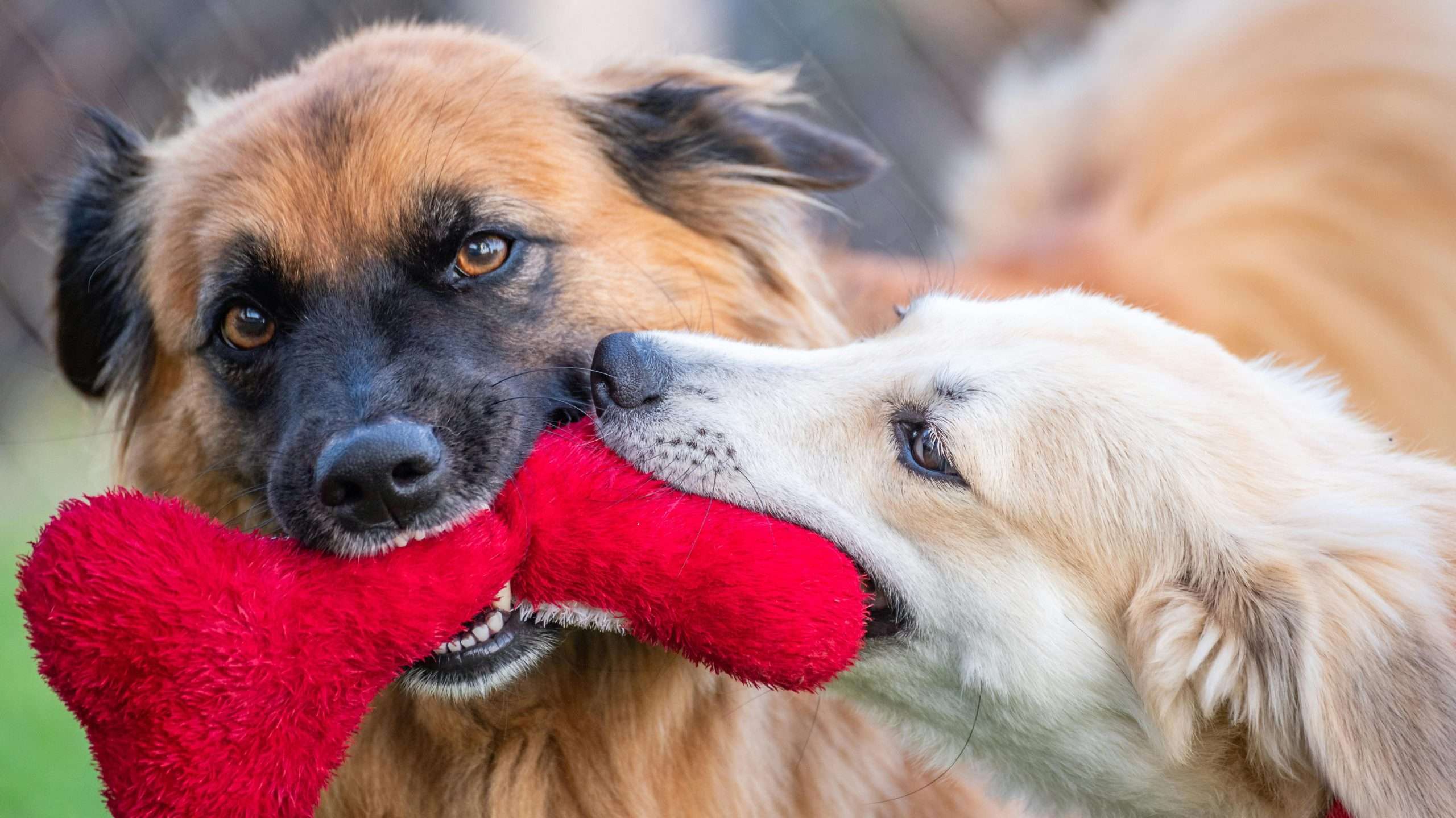
To break up a dog fight solo is significantly riskier, but not impossible. Here’s a safer method:
- Don’t scream or panic. You still need to keep your cool.
- Get a leash – loop it around the back of one dog’s waist or hip area.
- Secure one dog to a fence, pole, or other stable structure.
- Go to the second dog, grab its back legs (wheelbarrow-style), and move them away using the same circular motion.
- Only release the dogs once they’re safely out of each other’s sight and reach — ideally behind doors or inside crates.
A temporary leash can even be made from a belt, scarf, or long piece of rope. The goal is to safely anchor one dog so you can manage the other.
Avoid These Common Mistakes When You Break Up a Dog Fight
There are several things you shouldn’t do when trying to break up a dog fight:
- Never grab the collars – this is how most owners get bitten.
- Don’t put yourself between the dogs.
- Avoid using stun guns or cattle prods. These tools may increase aggression instead of stopping it.
- Don’t hit or kick the dogs. Not only is this inhumane, but it also rarely works and may redirect the aggression toward you.
Many people make the mistake of thinking a loud voice or sudden shock will interrupt the dog fight, but in reality, dogs are often too locked into the moment to respond to noise or discomfort.
After the Fight: Separate and Monitor
Once the dog fight has stopped, you need to act quickly to prevent a second round.
- Put each dog in a separate room, crate, or car.
- Check for injuries — even minor ones — and contact a vet.
- Don’t reintroduce the dogs too soon. They might still be agitated or in pain, which can trigger another fight.
Related reads:
10 Effective Ways to Help Your Dog Live Longer
Know the Warning Signs
Preventing a dog fight often comes down to recognizing the early signs of tension. Watch for:
- Stiff posture
- Direct, hard staring
- Raised hackles (fur along the back)
- A slow, stiff tail wag
- Lip licking, yawning, or turning the head away
If you see these signs, redirect your dog’s attention or calmly remove them from the situation before things escalate.
Using tools like a head halter (Halti) can help manage dogs who are prone to aggression or overstimulation. These allow you to gently redirect your dog’s head and attention before things spiral out of control.
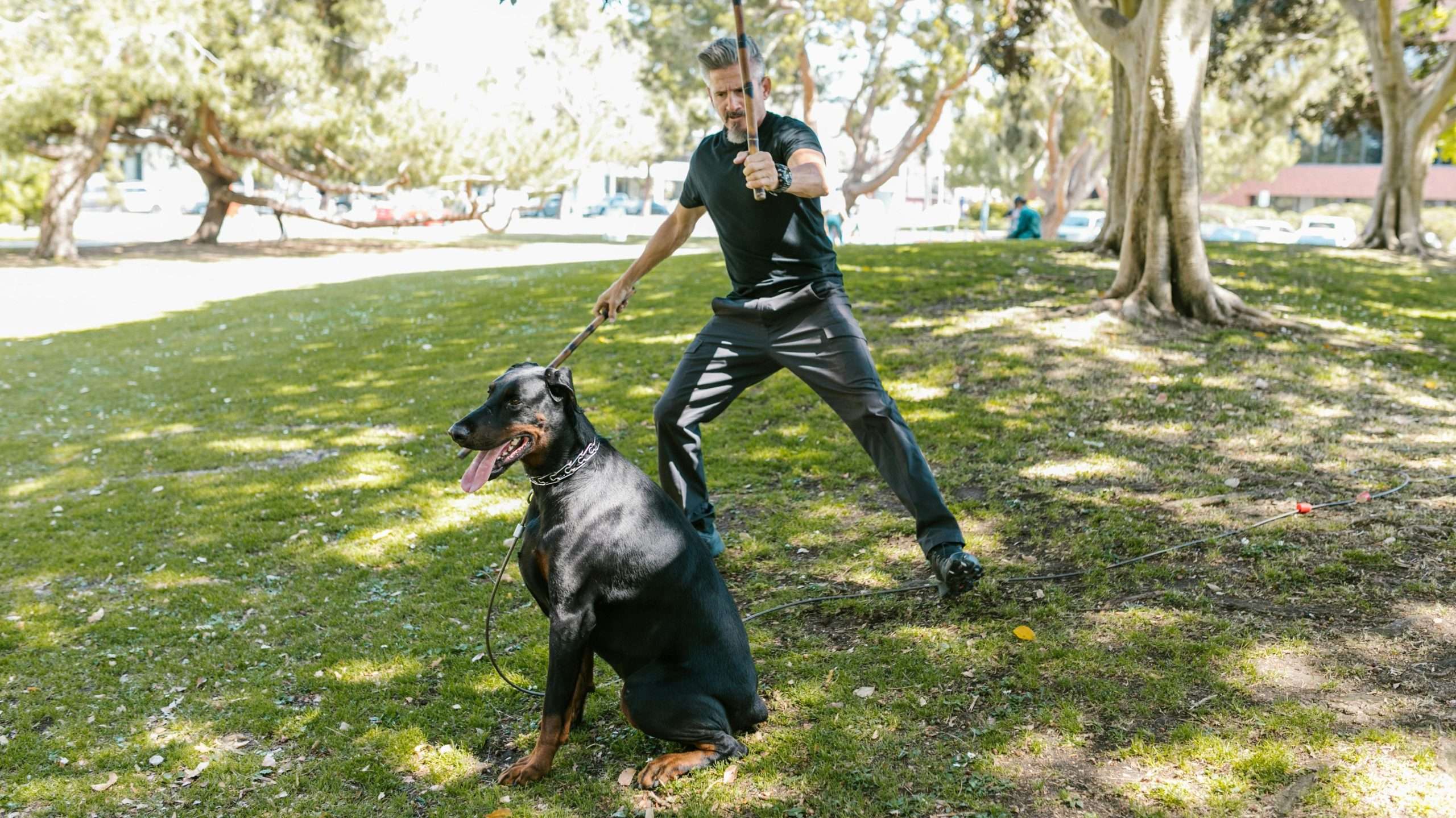
Living with Multiple Dogs
If you have more than one dog at home, especially dogs with a history of aggression, prevention is everything.
- Use muzzles during introductions or training sessions.
- Attach drag lines (short leashes) so you can safely intervene if needed.
- Supervise closely, especially around toys, food, or high-energy situations.
- Be the pack leader – enforce calm behavior and set clear boundaries.
For ongoing aggression, structured training using tools like remote collars (under expert guidance) can help. Timing is crucial – corrections should be given at the first sign of tension, not once a dog fight is already happening.
Final Thoughts on How to Break Up a Dog Fight
A dog fight can be a terrifying and dangerous experience for both you and your pets. But staying calm, using smart techniques, and knowing how to react can make all the difference. Whether you’re at the park or in your own home, being prepared is the best way to protect everyone involved.
If your dog is showing repeated signs of aggression or struggles to interact with other dogs, consider working with a qualified behaviorist. With the right training and tools, most dogs can learn to coexist peacefully and safely.