Hand Signals for Dogs: Your Ultimate Guide[2024]


Ever struggled to control your dog in a noisy park or wished you could communicate silently during obedience competitions? Hand signals for dogs might be the game-changer you’ve been looking for. This guide covers the secret language that can transform your relationship with your furry friend, making training more effective and communication seamless.
Imagine commanding your dog’s attention with just a flick of your wrist or having them perform tricks without uttering a word. Whether you’re dealing with a boisterous puppy or a senior dog losing their hearing, mastering hand signals in dog training opens up a world of possibilities. Let’s dive into this powerful, yet often overlooked, training technique that’s revolutionizing the way we interact with our dogs.

Introduction to Hand Signals for Dogs
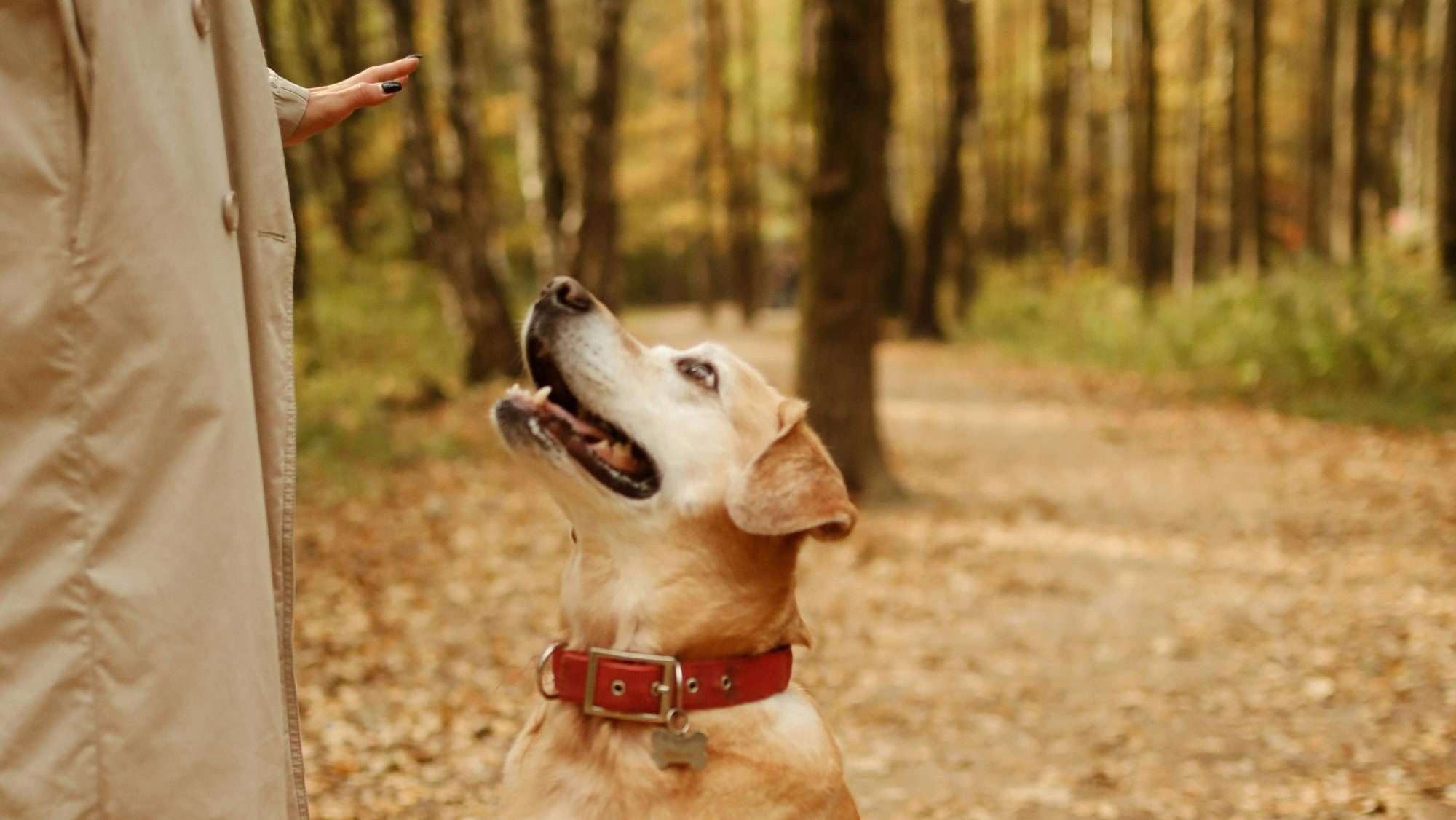
Dog training hand signals are non-verbal cues used to communicate specific commands or behaviors to dogs. These visual signals can be incredibly effective, as dogs are naturally attuned to body language and visual cues. Hand signals for dog training offer several advantages:
- They work well in noisy environments where verbal commands might be difficult to hear.
- They’re useful for dogs with hearing impairments.
- They can reinforce verbal commands, making training more effective.
- They provide a silent way to communicate with your dog in public settings.
How to Teach Hand Signals to Your Dog
Teaching your dog to respond to hand signals is a process that requires patience, consistency, and positive reinforcement. Here’s a step-by-step guide to get you started:
- Start with known verbal commands: Begin with commands your dog already knows verbally.
- Introduce the hand signal: Perform the hand signal immediately before giving the verbal command.
- Practice pairing: Consistently pair the hand signal with the verbal command for several training sessions.
- Phase out the verbal command: Gradually reduce the use of the verbal command, relying more on the hand signal.
- Reinforce with rewards: Use treats, praise, or toys to reward your dog for responding correctly to the hand signal.
- Practice regularly: Consistent, short training sessions will help solidify your dog’s understanding of the hand signals.
Essential Hand Signals for Dogs

Let’s explore some of the most common and useful hand signals for dog training:
Basic Hand Signals
- Sit: Raise your hand, palm up, from waist to chest level.
- Stay: Hold your palm out flat, facing your dog.
- Come: Start with your arm outstretched to the side, then bring it across your chest.
- Down: Begin with your hand at chest level, then lower it towards the ground.
- Heel: Pat your left hip with your hand.
Advanced Hand Signals
- Speak: Open and close your hand like a talking mouth.
- Quiet: Place your finger vertically across your lips.
- Roll over: Make a circular motion with your hand.
- Leave it: Make a quick slashing motion with your hand.
- Go to your place: Point to the designated area with two fingers.
Using a Dog Training Hand Signals Chart
A dog training hand signals chart can be an invaluable tool in your training arsenal. These visual aids provide a quick reference for various hand signals and their corresponding commands. Here are some tips for effectively using a hand signals chart:
- Keep the chart in a visible location during training sessions.
- Refer to the chart to ensure consistency in your signals.
- Use the chart to teach other family members the correct signals.
- Gradually reduce reliance on the chart as you memorize the signals.
Tips for Successful Hand Signal Training
To make the most of your hand signals for dogs training, consider these tips:
- Consistency is key: Use the same hand signal for each command every time.
- Timing matters: Give the hand signal at the exact moment you want the behavior to occur.
- Keep it simple: Use clear, distinct gestures that are easy for your dog to recognize.
- Practice in various environments: Start in a quiet area and gradually move to more distracting locations.
- Be patient: Some dogs may take longer to learn hand signals than others.
- Use positive reinforcement: Reward your dog generously for correct responses.
- Keep training sessions short: Aim for 5-10 minute sessions to maintain your dog’s focus and enthusiasm.
Related reads:
Mastering Essential Dog Commands: A Step-by-Step Guide to Teaching Sit, Stay, Down, and More
Troubleshooting Common Issues
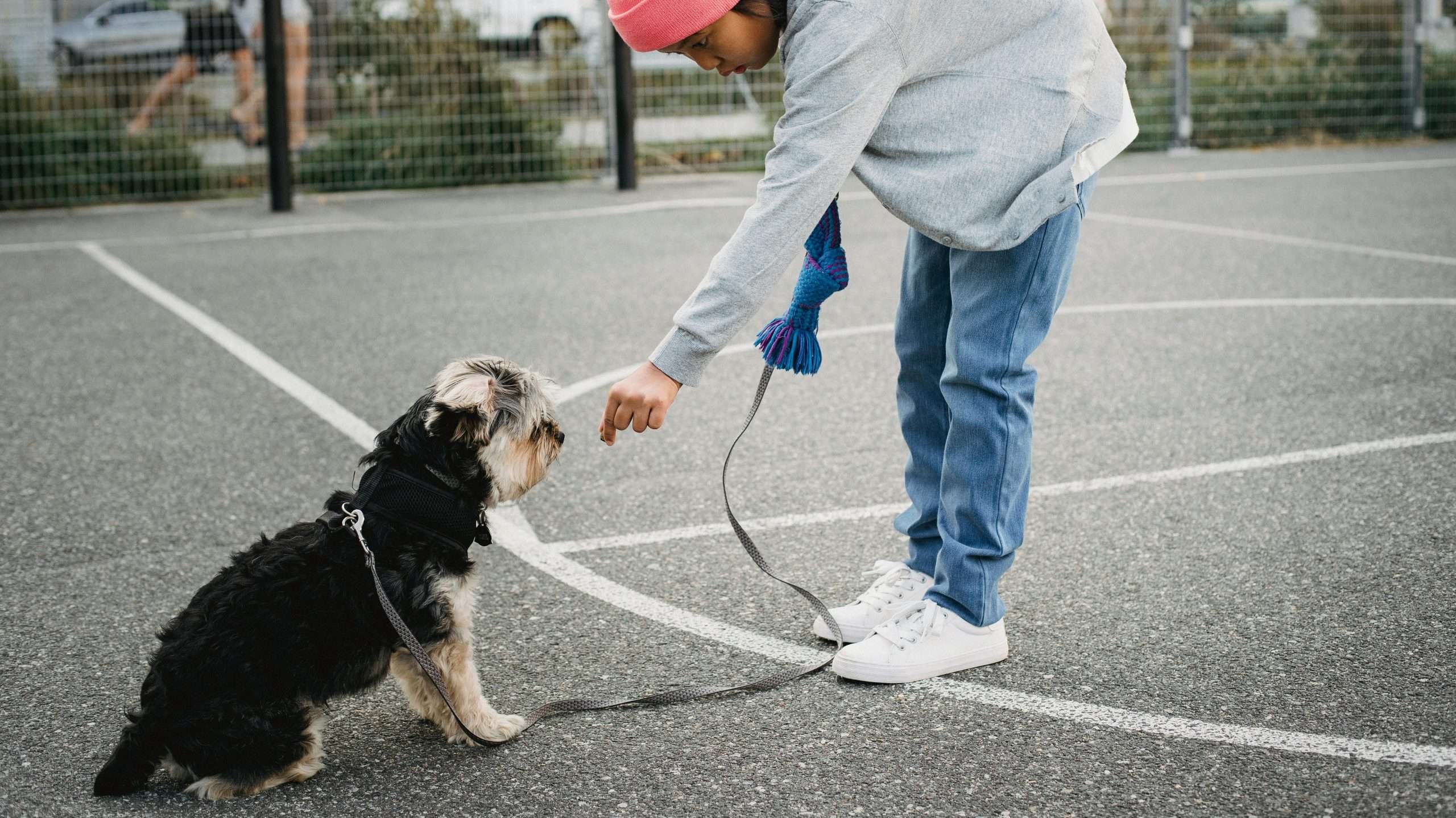
Even with the best training techniques, you may encounter some challenges when teaching hand signals for dogs. Here are some common issues and solutions:
- Dog doesn’t respond to the signal:
- Ensure you’re using the correct signal consistently.
- Go back to pairing the hand signal with the verbal command.
- Practice in a less distracting environment.
- Dog confuses similar signals:
- Make sure your signals are distinct from one another.
- Practice problematic signals separately before using them together.
- Dog loses interest:
- Keep training sessions short and fun.
- Use high-value treats or toys as rewards.
- End sessions on a positive note with an easy, familiar command.
- Older dogs or certain breeds seem less responsive:
- Be patient and allow more time for learning.
- Adjust signals if necessary to accommodate physical limitations.
- Consider your dog’s natural tendencies and adjust your expectations accordingly.
Final Words: Enhancing Communication with Your Dog
Incorporating hand signals for dogs into your training routine can significantly enhance your communication with your canine companion. Not only does it provide a silent way to give commands, but it also engages your dog’s natural ability to read body language. With patience, consistency, and positive reinforcement, you can build a rich, non-verbal vocabulary with your dog, strengthening your bond and improving obedience.
Remember, every dog is unique, and what works for one may not work for another. Be willing to adapt your approach and always keep training sessions positive and rewarding. With time and practice, you’ll find that hand signals for dog training become an intuitive and effective way to communicate with your four-legged friend.
Whether you’re a first-time dog owner or an experienced trainer, mastering hand signals for dogs can take your relationship with your pet to the next level. So why wait? Start incorporating these silent signals into your training routine today and watch as your dog becomes more attentive, responsive, and in tune with your every gesture.
FAQs
Can all dogs learn hand signals?
Yes, most dogs can learn hand signals. Some may learn faster than others, but with patience and consistency, most dogs can be trained to respond to hand signals.
At what age should I start teaching my dog hand signals?
You can start introducing hand signals as early as 8 weeks old, but it’s never too late to teach an old dog new tricks!
Can I use hand signals exclusively, without verbal commands?
While it’s possible to use hand signals exclusively, it’s generally recommended to use a combination of both verbal and hand signal commands for the most effective communication.
How long does it take for a dog to learn hand signals?
The learning process varies for each dog, but with consistent daily practice, most dogs can start responding to basic hand signals within a few weeks.
Are there universal hand signals for dog training?
While there are commonly used signals, there’s no strict universal standard. The most important thing is to be consistent with the signals you choose to use with your dog.