Dog Hip Dysplasia Symptoms Early Detection: A Complete Guide

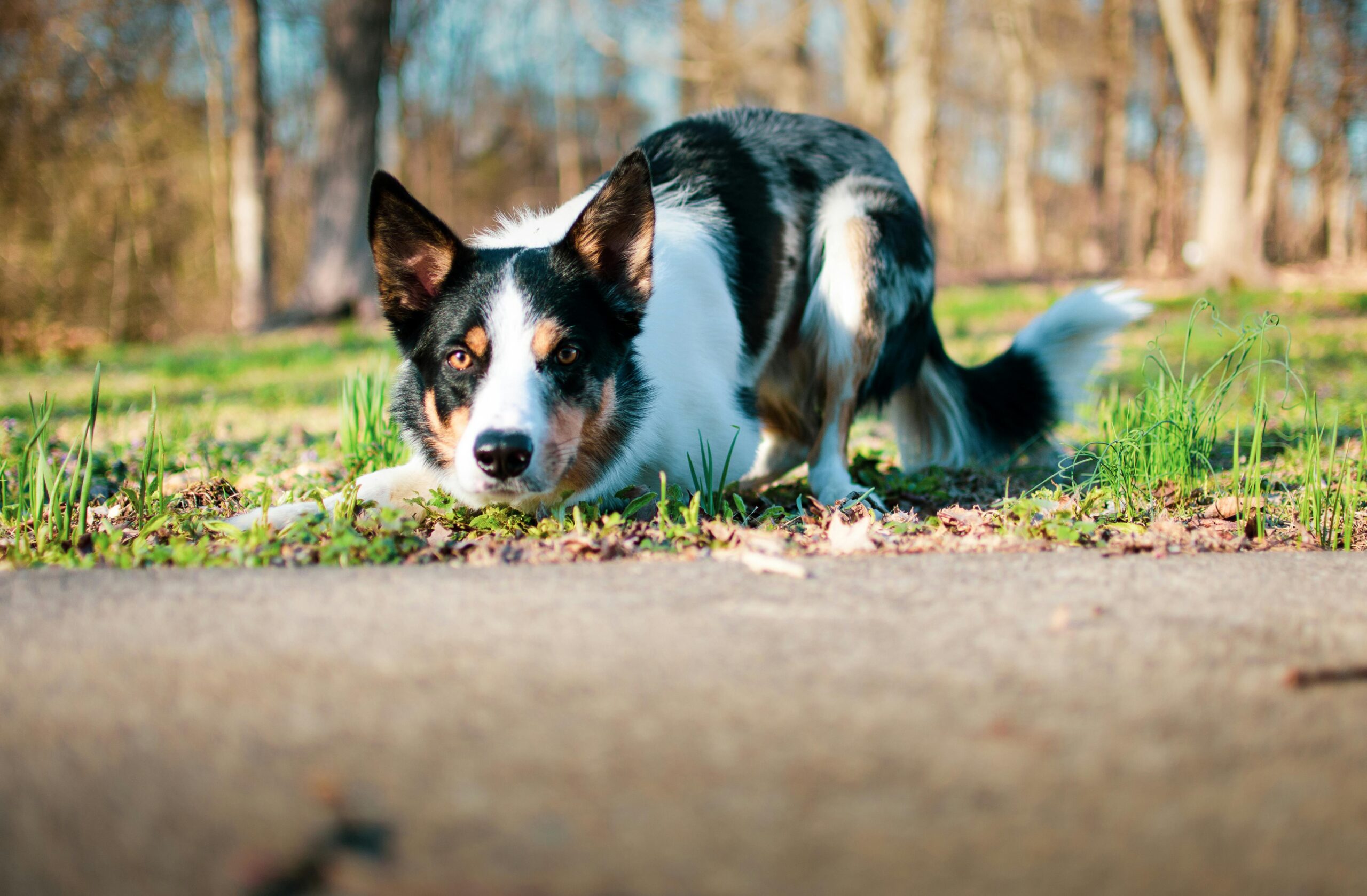
When a normally active dog starts slowing down, most owners assume it is just a phase or mild soreness. But sometimes, those small changes point to something more serious. Dog hip dysplasia is one of the most common orthopedic conditions in dogs, and early detection can make a significant difference in long term comfort and mobility.
Understanding the early warning signs of hip dysplasia helps you act before pain becomes severe and joint damage progresses. This guide walks you through symptoms, subtle behavioral clues, and what early diagnosis really looks like.

What Is Hip Dysplasia?

Hip dysplasia is a developmental condition where the hip joint does not form properly. In a healthy dog, the ball and socket joint of the hip fits snugly and moves smoothly. In dogs with hip dysplasia, the joint is loose or improperly aligned. Over time, this instability causes wear, inflammation, and eventually arthritis.
It is most common in large and giant breeds such as Labrador Retrievers, Golden Retrievers, Rottweilers, and German Shepherds. However, small and medium breeds can also develop dog hip dysplasia, especially if genetics, rapid growth, or obesity play a role.
The condition can begin in puppyhood, even if symptoms are not obvious at first.
How Hip Dysplasia Develops in Dogs
To understand early detection, it helps to know how the condition progresses.
Puppies are not born with severe joint damage. Instead, they inherit a tendency toward joint laxity. As they grow, the loose hip joint causes abnormal movement. This repeated friction leads to cartilage damage, inflammation, and gradual joint degeneration.
Over time, the body tries to stabilize the joint by forming new bone, which results in arthritis. This is why early intervention in dog hip dysplasia is so important. The earlier the instability is addressed, the better the outcome.
Early Dog Hip Dysplasia Symptoms to Watch For
The earliest signs of dog hip dysplasia are often subtle. Many dogs continue to eat, play, and appear normal while compensating for discomfort.
Difficulty Rising or Lying Down
One of the first noticeable signs of dog hip dysplasia is hesitation when getting up. Your dog may:
- Struggle to stand after resting
- Push up slowly using the front legs
- Pause before sitting or lying down
This stiffness is often more obvious after long naps.
Changes in Gait
A classic early sign of dog hip dysplasia is an unusual gait. You might notice:
- A bunny hopping motion while running
- Swaying hips
- Shorter strides in the back legs
- Occasional limping that comes and goes
Because limping may disappear after warming up, it is easy to dismiss in the early stages.
Reluctance to Jump or Climb
If your dog suddenly avoids stairs, couches, or car jumps, do not ignore it. Avoidance behavior is often one of the earliest indicators of discomfort from dog hip dysplasia.
Dogs that once loved running may tire faster or choose to sit out play sessions.
Stiffness After Exercise
Some dogs with early dog hip dysplasia appear fine during activity but show stiffness afterward. You may see:
- Slower movements the next morning
- Mild limping after long walks
- Hesitation to move after vigorous play
These patterns are important clues.
Physical Signs of Dog Hip Dysplasia at Home
Even without veterinary equipment, you may notice visible changes.
Muscle Loss in Hind Legs
Dogs with ongoing joint instability shift weight forward to reduce pressure on their hips. Over time, this can cause muscle atrophy in the back legs.
If your dog’s rear legs look thinner than before, dog hip dysplasia could be contributing.
Narrow Stance
Some dogs stand with their hind legs closer together than normal. This stance helps stabilize loose joints but signals underlying discomfort.
Audible Clicking or Popping
In certain cases of dog hip dysplasia, you may hear clicking sounds when your dog moves. This occurs when the loose joint shifts abnormally inside the socket.
Behavioral Clues Linked to Dog Hip Dysplasia
Dogs often mask pain well. Behavioral changes may appear before clear physical signs.
You may notice:
- Irritability when touched near the hips
- Less enthusiasm for walks
- Choosing softer surfaces to lie on
- Increased sleeping or decreased play
These subtle changes are sometimes the earliest hints of dog hip dysplasia, especially in young dogs.
At What Age Does Dog Hip Dysplasia Appear?
There is no single timeline.
Puppies
In severe cases, symptoms of dog hip dysplasia can appear as early as five to six months. Puppies may show difficulty rising or abnormal gait patterns.
Young Adults
Many dogs begin showing clearer signs between one and two years of age, when skeletal growth is complete.
Middle Aged and Senior Dogs
Some dogs do not show obvious signs until arthritis develops later in life. In these cases, the early joint laxity may have gone unnoticed for years.
Understanding that dog hip dysplasia can appear at different life stages reinforces the importance of monitoring mobility regularly.
Professional Early Detection of Dog Hip Dysplasia
Home observation is important, but diagnosis requires veterinary evaluation.
Physical Examination
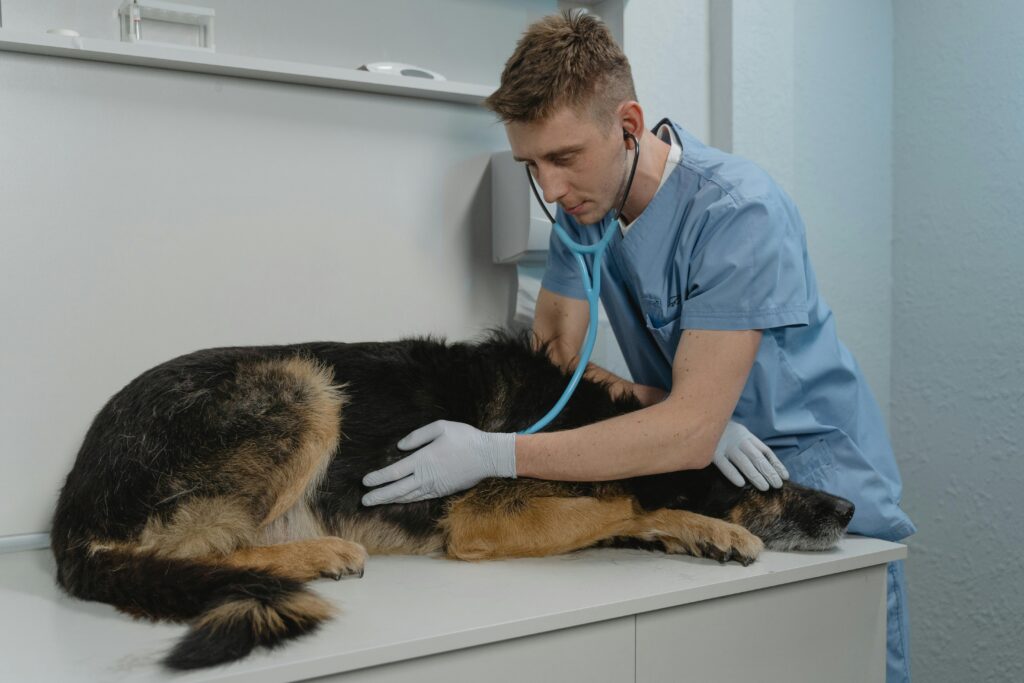
A veterinarian will assess range of motion, joint stability, and pain response. One specific test used to detect hip laxity is the Ortolani test. This helps identify early instability in dog hip dysplasia cases.
X Rays
Radiographs remain the primary diagnostic tool for dog hip dysplasia. They reveal joint looseness, abnormal bone development, and signs of arthritis.
OFA and PennHIP Screening
The Orthopedic Foundation for Animals evaluates hip radiographs for breeding and health screening. PennHIP testing can assess joint laxity in puppies as young as sixteen weeks, allowing earlier detection of dog hip dysplasia risk.
Early screening is especially important for high risk breeds.
Why Early Detection of Dog Hip Dysplasia Matters
Catching dog hip dysplasia early offers several advantages.
First, weight management can be implemented immediately. Excess weight increases stress on unstable joints.
Second, controlled exercise programs can strengthen supporting muscles without worsening joint damage.
Third, early medical management, including joint supplements and anti inflammatory medications, can reduce long term arthritis progression.
In some young dogs, surgical procedures performed early may prevent severe degeneration. The earlier the condition is identified, the more treatment options are available.
What To Do If You Suspect Dog Hip Dysplasia
If you notice signs that could point to dog hip dysplasia, take practical steps.
Observe patterns. Note when stiffness occurs and how long it lasts.
Record videos of gait changes. This helps your veterinarian evaluate subtle abnormalities.
Schedule a veterinary appointment for proper evaluation and imaging.
Avoid intense exercise until your dog is assessed.
Acting early improves comfort and long term outcomes.
Waving Goodbye
Small mobility changes should never be ignored. What looks like temporary stiffness could be the early stages of dog hip dysplasia. Paying attention to gait, posture, energy levels, and behavior gives you the best chance of catching the condition early.
Early detection of dog hip dysplasia allows for better pain management, improved joint support, and a higher quality of life. With careful observation and timely veterinary care, many dogs with hip dysplasia continue to live active and comfortable lives for years.
Being proactive is the most powerful tool you have when it comes to protecting your dog’s mobility.
![How to Choose Healthy Food for Your Dog [2024]](https://100dogbreeds.com/wp-content/uploads/2024/07/dog-healthy-food-768x512.jpg)